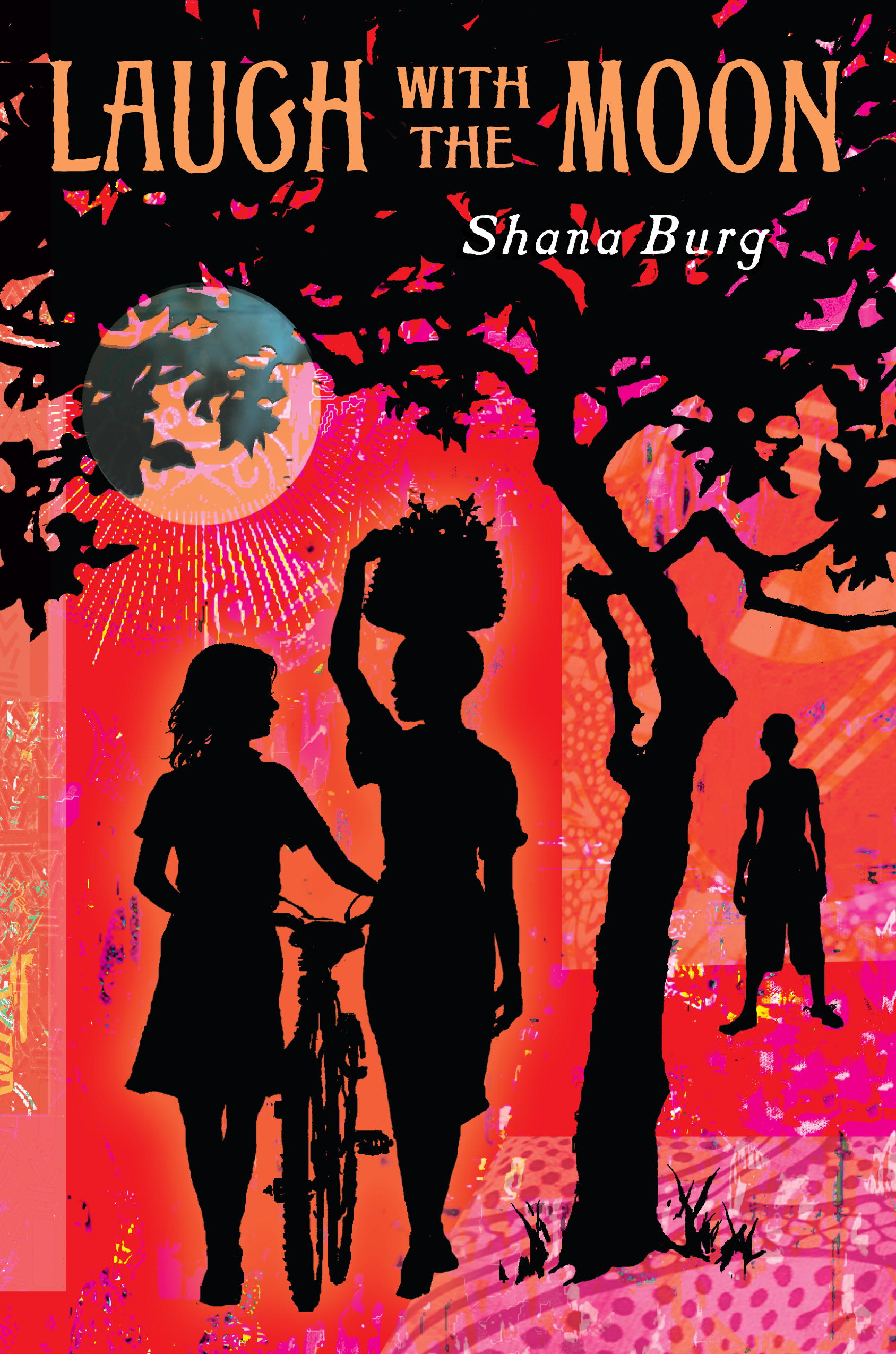
 The small country of Malawi, in south-central Africa, rarely appears on children’s authors’ radars, but two books published in 2012—Shana Burg’s middle grade novel Laugh with the Moon (Delacorte) and the picture book version of The Boy Who Harnessed the Wind (Dial), written by William Kamkwamba and Bryan Mealer and illustrated by Elizabeth Zunon—take place there. The two books have other things in common, including their rural settings, the perils of famine, and the value that young Malawians place on education.
Laugh with the Moon presents rural Malawi through the eyes of a visitor from the United States, 13-year-old Clare Silver. Clare’s mother has died recently, and her father, a doctor, has decided to travel to Malawi to work for the Global Health Project. Dragged along against her will, Clare soon learns that she will be attending a village school as well. Despite missing her friends at home, Clare quickly befriends a Malawian girl her age, Memory, and Memory’s irrepressible younger brother, Innocent, and she gets caught up in a rivalry between Memory and “mean girl” Agnes—showing that mean girls and rivalries for a boy’s attentions know few geographical or cultural boundaries. Pampered at first, Clare is assigned a tough chore at the school, to become the English teacher of more than a hundred first graders, but with the help of Innocent she gives it her best shot.
Burg’s intimate knowledge of Malawi’s educational system comes from personal research. She gives the story depth and credibility without overwhelming the reader with detail. Clare shares with Memory and Innocent the experience of having lost a parent (in their case it’s both parents), and Burg handles with sensitivity and insight the theme of death, showing how it affects young people across cultures. Burg also gets kudos for the specificity of her setting—at no point are the descriptions generically “African.” Readers come to understand the differences between rural and urban life and how language—Chichewa and English—shape the way people think.
In an earlier stop on her blog tour, Burg mentioned the memoir The Boy Who Harnessed the Wind (HarperCollins, 2009) as a book that influenced 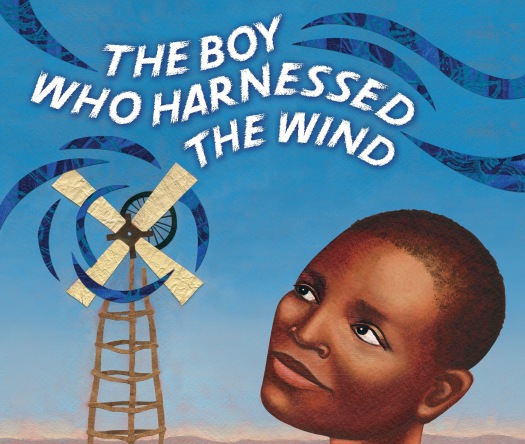 her decision to write Laugh with the Moon. This picture book version presents the true story of Kamkwamba, who like several characters in Burg’s novel, was forced to drop out of school because of drought, famine, and poverty. There was a library in his village, and there he pursued his interest in science, using a dictionary to translate the English words into Chichewa. One of the books gave Kamkwamba the idea to build a windmill to create electricity, and another to pump water from the ground to keep his mother’s vegetable garden alive with no rain.
Elizabeth Zunon’s collage illustrations, made from a variety of materials, capture the young author’s ingenuity as well as the colors of the land and the village before, during, and after the great drought of 2001-02. A two-page author’s note following the text carries the story to the present day. The Boy Who Harnessed the Wind is an inspiring story of one boy’s intelligence, curiosity, and determination and how it made a difference for his family and his entire community.